合作夥伴

NASDAQ是全球第一個電腦化的證券交易所。
NASDAQ主要交易科技公司的股票。除了股票交易,NASDAQ也提供其他金融服務,如期貨和衍生品交易、資產管理和數據服務。
美國佔有全世界股票市值總額超過50%,聚集全球各產業的龍頭公司,而Nasdaq擁有超過 50% 美股成交量市佔。
百商數位是NASDAQ在台灣唯一的指定數據整合及介接商,將提供客戶最穩定、快速的美股行情資料及盤後數據資料。
合作夥伴

ICE擁有並運營12個受監管的交易所與市場,包括美國、加拿大、歐洲的ICE期貨交易所、歐洲Liffe期貨交易所、紐約證交所、股票期權交易所,以及場外能源、信用和股票市場。
ICE數據庫(ICE Data Services)提供市場數據與分析服務,涵蓋多種資產類別,協助用戶進行投資、交易、合規與風險管理。其解決方案包含即時與歷史數據、指數與交易資料,並以安全靈活方式提供。
百商數位支援ICE資料庫及數據API介接,並可提供大型客服平台建置服務。
合作夥伴

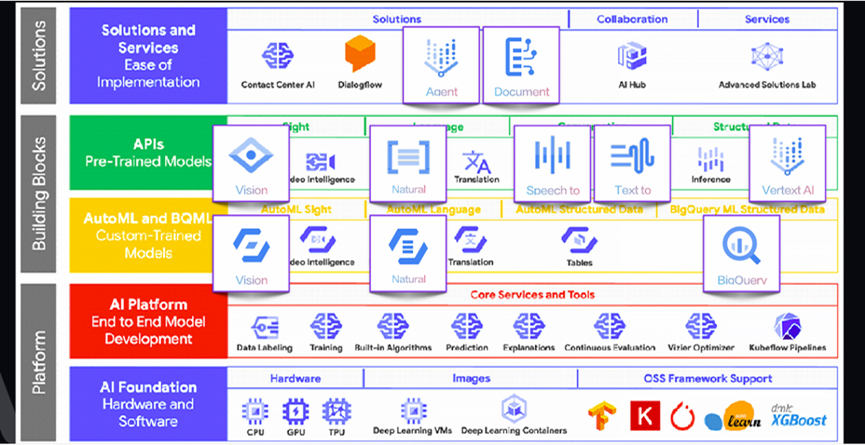
百商數位在GOOGLE環境下,提供AI系統整合與創新業務,強化算力介接及客製化中間層。
同時,支援AI客服、影音自動生成、研報產生、資料整合等平台,幫助客戶實現數據與AI應用的有效連接。
合作夥伴
IBM與百商數位合作,為客戶提供證券、期貨交易整合平台,運用IBM主機(Mainframe)高效計算,處理大量數據與交易,並確保最高等級的安全性與可靠性。
主機在商業資料庫、交易服務器及需高彈性與安全性的應用中扮演關鍵角色,如 Linux on Power、Non-stop LinuxOne。
另提供地端AI解決方案,協助高監管企業實踐AI同時兼顧資安與個資保護。
合作夥伴

MT Newswires 是一家專注於提供全球金融新聞的公司。該公司提供原創、實時、多資產類別的新聞,超過180個主題、觸及逾10億讀者。
MT Newswires 的新聞服務被全球最大的銀行、經紀公司、專業市場數據、金融門戶、交易、財富管理和研究應用所使用,並以其卓越的服務和實時市場知識而聞名。
百商數位 是MT Newswires 在台灣唯一的指定數據整合及介接商,將提供客戶穩定、快速的美股及海外商品即時新聞、目標價等資料。
合作夥伴

IB盈透證券提供多元化的金融商品交易,包括股票、ETF、期貨、選擇權、債券、外匯、基金以及差價合約(CFD)等,覆蓋超過150個市場和34個國家,巳提供中文介面和客服。
百商與IB公司巳有企業用資產管理平台串接之合作,並提供國內企業用戶及機構法人系統整合服務。



MDBS Invited to Speak at IBM Solutions Day
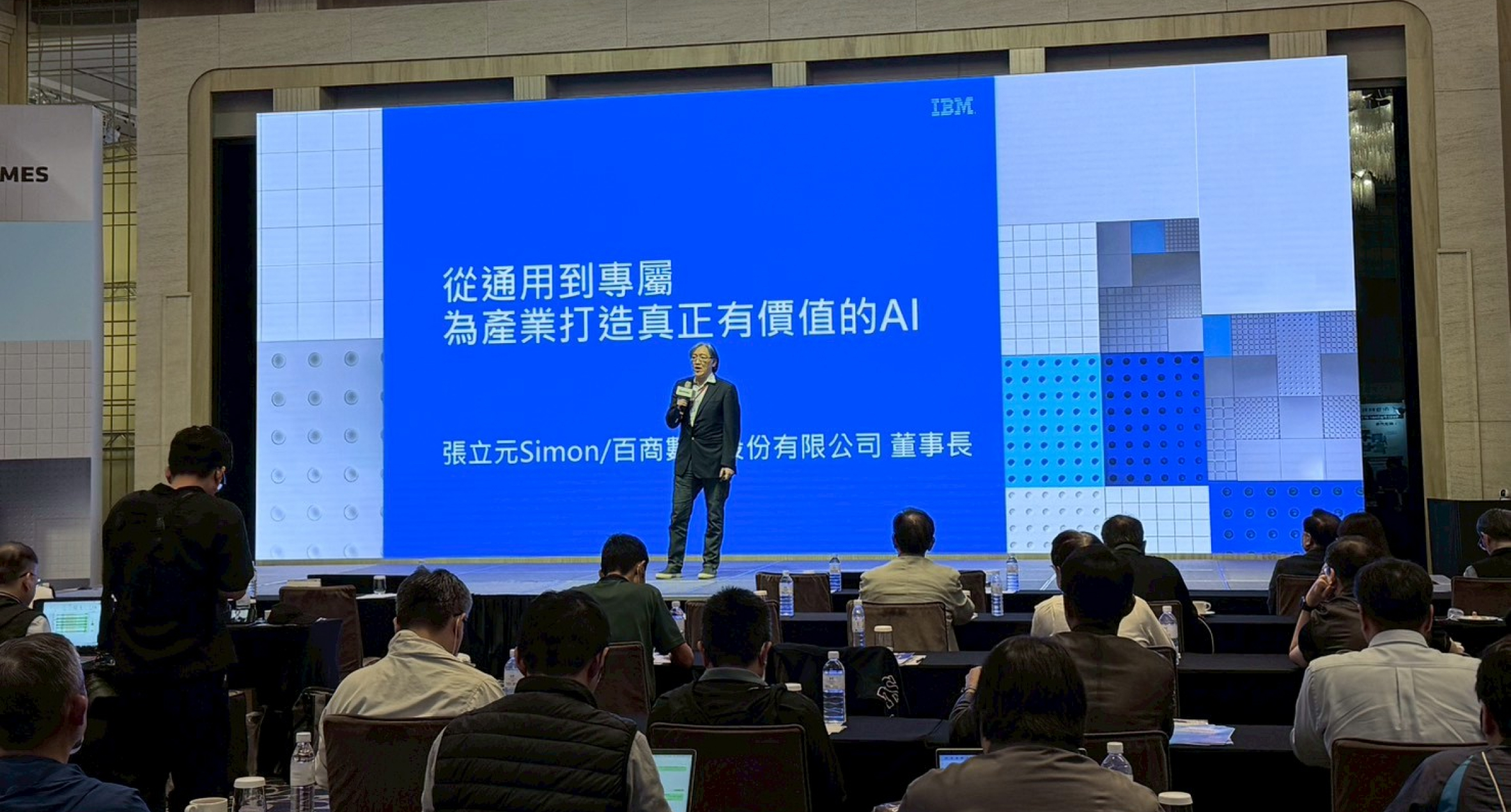
Chairman Simon Chang of MDBS delivered a keynote speech at IBM Solutions Day. Photo / MDBS
MDBS was invited to participate in this event, where Chairman Simon Chang presented a keynote titled “From General to Specialized: Building Truly Valuable AI for Industries.” He shared key trends and practical insights on enterprise AI implementation.
AI Has Moved from Demonstration to Real-World Value
AI development has evolved from a stage of technical demonstration to one focused on real-world application and value validation.
In the early stages, enterprises adopted AI primarily to improve efficiency and enhance creativity. However, during actual implementation, companies began to notice a clear gap: general-purpose AI is good at generating responses, but lacks execution capability.
Simon Chang pointed out three recurring challenges enterprises face when implementing AI:
1. Difficulty integrating with complex workflows
2. Data compliance risks
3. AI remaining at the conversational level without real execution capability
These challenges have become the main barriers preventing AI from moving from concept to real deployment.
The market is now showing a clear shift—from Generative AI to Agentic AI, which is capable of executing tasks. This transition has become a key trend in industry development.
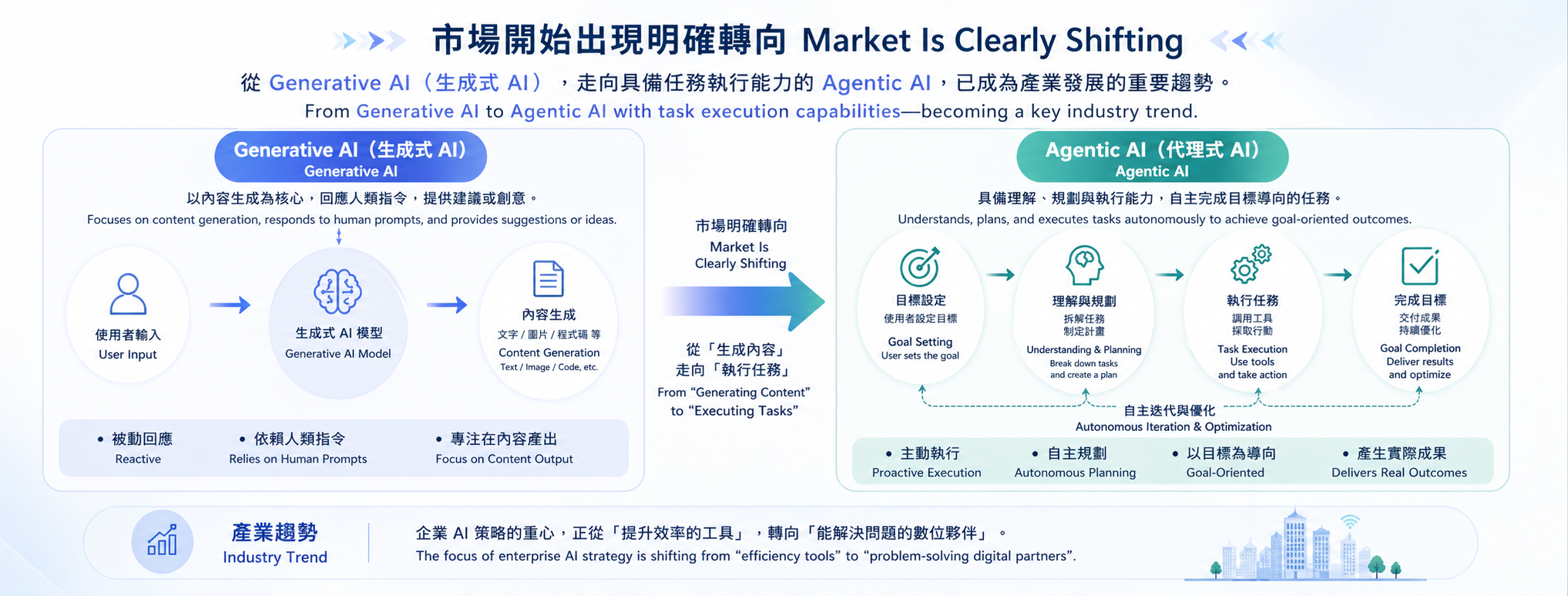
Transition from Generative AI to Agentic AI. Photo / MDBS (AI-generated)
The Key to Enterprise AI Lies in Integration and Governance
According to Simon Chang, the real challenge for enterprises is enabling AI to integrate with existing systems and actively participate in operational workflows.
AI competition has shifted from model capability to integration architecture and deployment capability. By leveraging modular models, rule-based orchestration, and hybrid cloud/on-premise deployment, enterprises can move AI beyond conversation into execution.
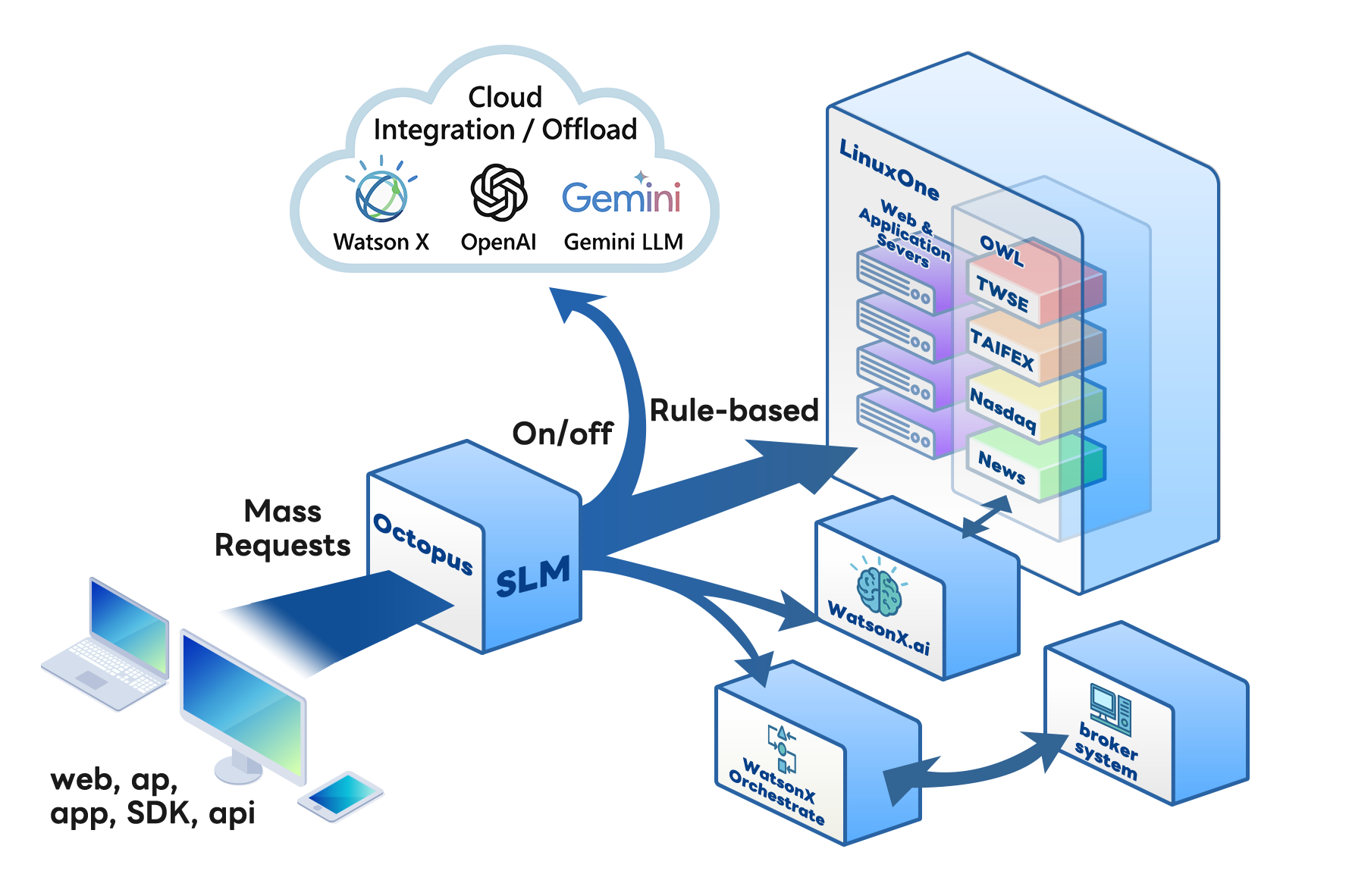
Effective AI integration enables real enterprise deployment. Photo / MDBS
Taking IBM Orchestrate as an example, its skill-based integration framework connects systems such as ERP, CRM, and collaboration tools, allowing AI to become part of business processes. Its low-code architecture further reduces adoption barriers, enabling rapid deployment and validation.
AI Is Already Delivering Value Across Industries
AI applications have demonstrated real-world impact across multiple industries:
• Finance: Integrating market data, trading decisions, and account opening processes to enhance end-to-end service efficiency
• Investment:Combining chart analysis, financial reports, and real-time news to support more comprehensive decision-making
• Manufacturing: Applied to knowledge retrieval and document understanding, extending to order and production management
• Enterprise Operations: Integrating HR systems, including payroll, attendance, and administrative processes, reducing manual workload
Overall, AI is evolving from isolated tools into integrated, process-driven systems.
Governance Builds Trust in AI
In highly regulated industries, governance is critical.
IBM watsonx provides traceability and explainability, ensuring transparency in AI decision-making and strengthening enterprise trust.
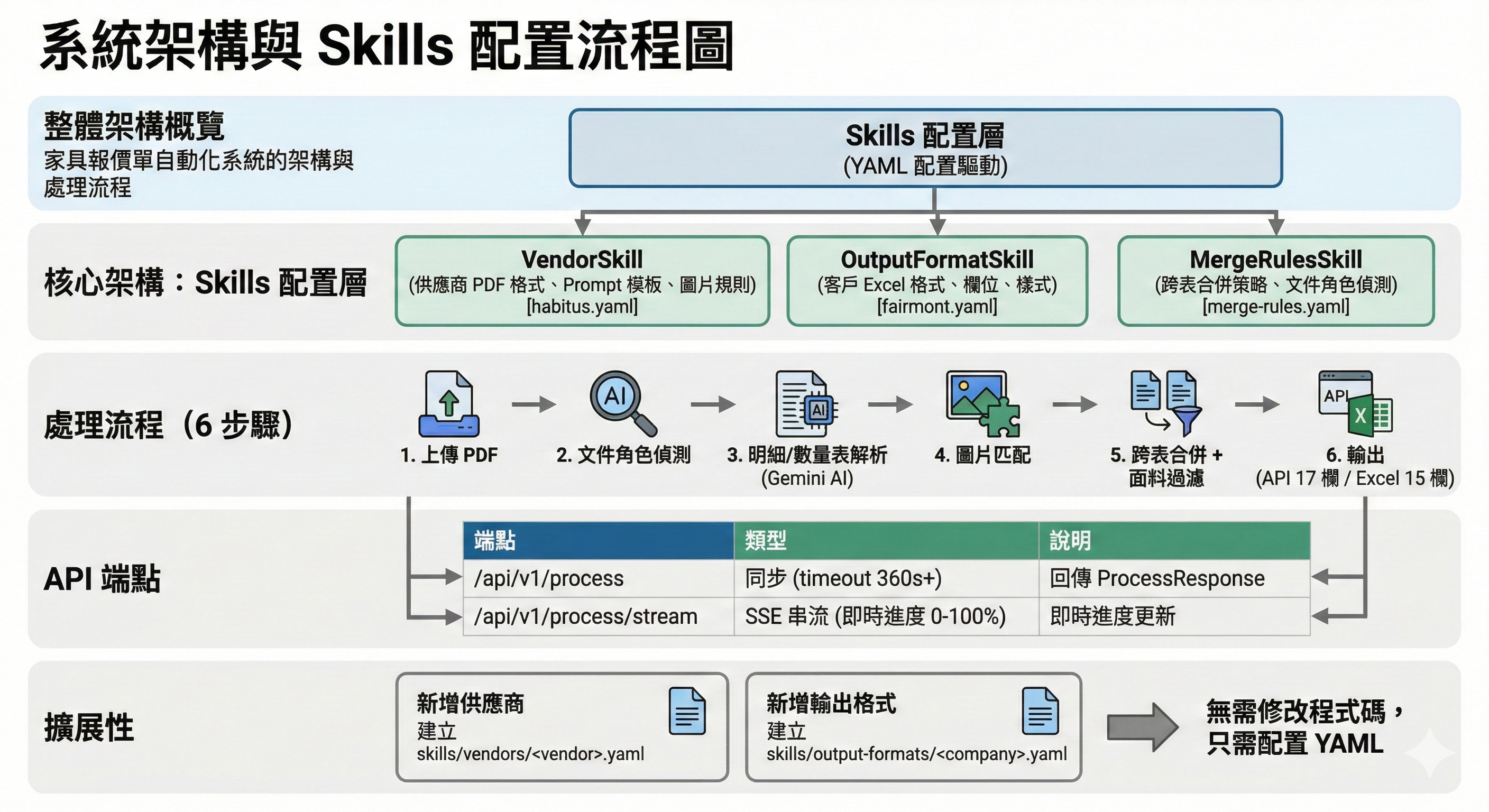
System architecture and skills configuration workflow. Photo / MDBS (AI-generated)
Three Stages of Enterprise AI Adoption
Simon Chang outlined three key stages in AI adoption:
• Identify – Find the right entry point
Start with highly repetitive and logic-driven processes to minimize initial risks
• Pilot – Validate on a small scale
Use PoC (Proof of Concept) to verify feasibility and guide decision-making
• Scale – Expand across the organization
Extend successful use cases to more departments and scenarios
This structured approach has become a widely adopted best practice for effective AI implementation.
As AI technology matures, technology itself is no longer the main barrier.
According to Simon Chang, the key to future competitiveness lies in how well enterprises integrate AI into existing workflows and continuously expand its applications.
In other words, the real competitive advantage does not belong to companies that adopt AI, but to those that can operate AI continuously and generate real outcomes.
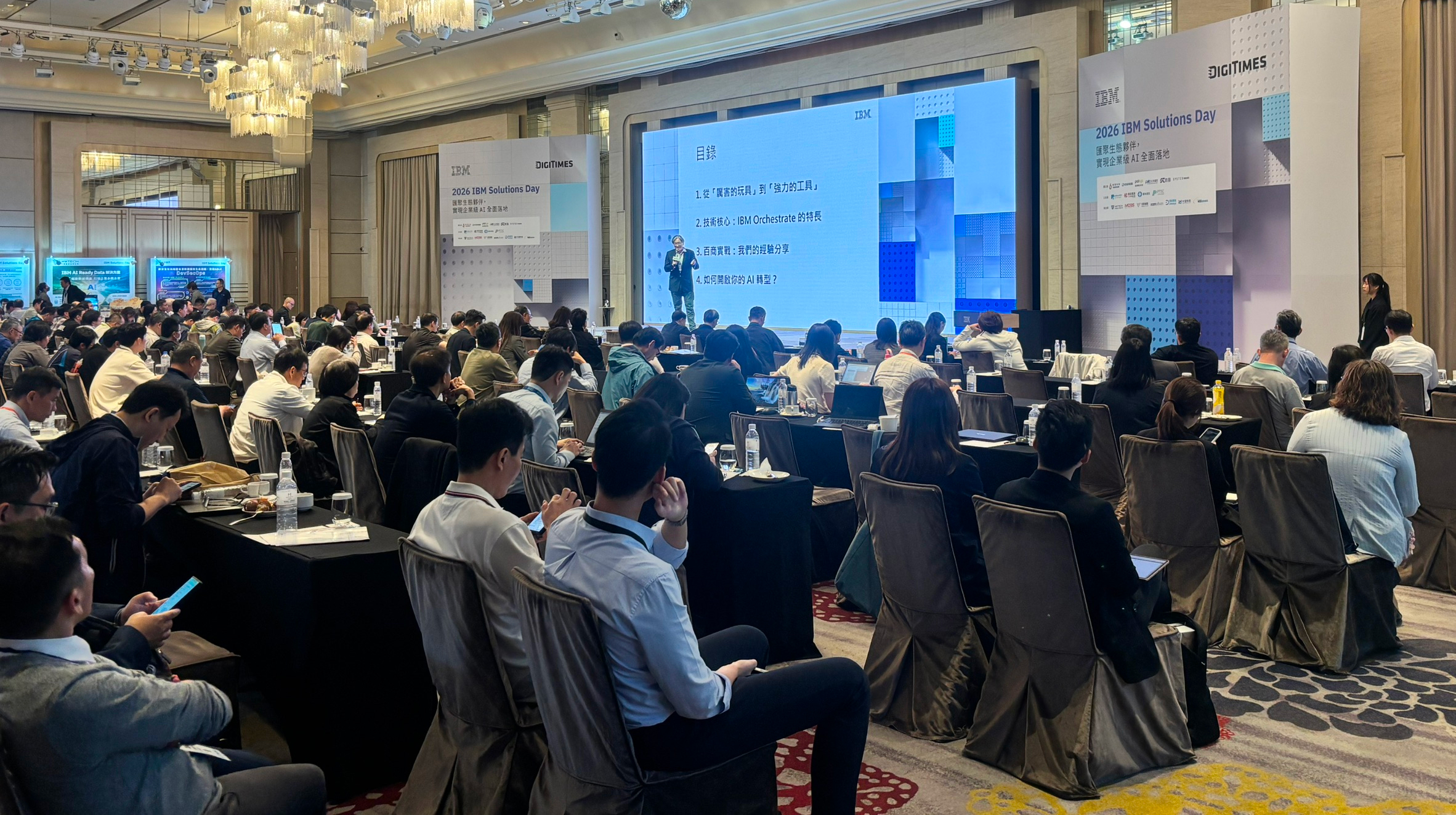
IBM Solutions Day event highlights. Photo / MDBS
MDBS has long been dedicated to enterprise AI integration—from process analysis and system integration to deployment and validation—helping companies implement AI step by step.
Being invited to IBM Solutions Day not only reflects MDBS’s practical experience but also highlights a new stage in the evolution of enterprise AI applications.